Was this “worth” learning? We’ll let the balls decide.
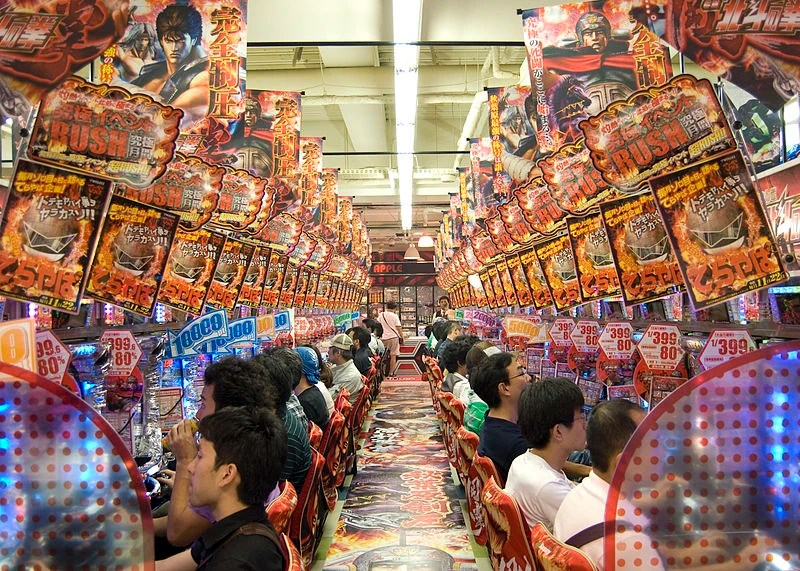
Noise is intense, some smoke and flashing lights are guaranteed. It is safe, staff are helpful even if you only speak English, and if you treat it as paid entertainment rather than a money making scheme you will have a much better time.
Extended TLDR;
Pachinko is a Japanese gambling game that mixes vertical pinball with slot machines. You rent steel balls, use a dial to fire them onto a vertical field of pins, and try to drop them into a small “start” pocket. Each ball that lands there triggers a digital slot sequence. If the slots line up, you hit a jackpot and the machine spits out a big shower of balls as your prize.
Modern machines are hybrids:
- The physical part (pins, launch angle) controls how often balls reach the start pocket.
- The jackpot itself is decided by an internal random number generator (RNG), similar to a slot.
Legally, winnings are balls. You trade balls for prizes inside the hall, then quietly sell a special “token prize” for cash at a separate window. That three step flow keeps pachinko in a grey zone rather than direct cash gambling.
Where skill actually lives (how to get an edge)
“Don’t freak out if 10, 20, 30 balls go by with nothing; that’s pachinko.”
There is no timing trick to beat the RNG. Skill is mostly in:
- Machine selection: Parlors slightly bend the brass pins to make machines “tight” or “loose”. Your job is to find ones where a good dial setting sends roughly 1 in 8 to 1 in 10 balls into the start pocket. Test a machine with a small amount of money. If even after tweaking the dial you rarely hit the pocket, move on.
- Reading behavior: A good machine feels consistent. Same dial angle, similar ball path, regular entries into the gate, occasional small wins. A bad one burns money fast with almost no engagement.
- Understanding modes: After some jackpots, the machine enters a high probability mode (kakuhen) where further wins are much more likely for a short period. Others give a “time short” mode (jitan) with normal odds but faster cycles. These modes change risk and reward, but you cannot force them to appear.
- Bankroll and discipline: Set a hard budget, pace your shots, and be willing to leave after a big win instead of “giving it back”. The industry average return is around 85 percent, so long sessions usually favor the house.
Blind spot to watch: a machine can absolutely feel “due”, but that is the gambler’s fallacy. Outside of specific modes, each spin is mathematically independent.
Practical travel notes for Hokkaido
In Sapporo, Susukino and the station area are packed with parlors like Maruhan and Vegas Vegas that are clean, modern and used to tourists. Hakodate and Asahikawa also have large chain halls near their central stations. Otaru has fewer active halls, so Sapporo is a better bet for a “big hall” experience.
How to play in practice:
- Choose a 1 yen section if you want cheaper, longer sessions.
- Sit, insert cash, press the “ball rental” button, and balls will drop into your tray.
- Use the dial to find a launch strength that regularly feeds the center.
- When you are done, call staff. They count your balls, give you a ticket, you swap for prize tokens, then cash those at the small exchange booth outside.
FULL ARTICLE BELOW
A Brief History
Pachinko originated in the 1920s from American and European bagatelle-style games (often called the “Corinth game”) that were imported to Japan as children’s toys[1][2]. Japanese kids nicknamed the bouncing balls “pachi-pachi” for the clicking sound against the glass[3]. By the 1930s, these tabletop games evolved into the first true pachinko machines with brass pins and pay pockets (predecessors of today’s machines)[4]. Pachinko parlors spread rapidly until World War II, when they were shut down due to metal rationing.
After the war, pachinko boomed – the first commercial parlor opened in Nagoya in 1948 and millions of Japanese embraced the game in the 1950s[2][5]. A key innovation was Takeichi Masamura’s new pin configuration (“Masamura Gauge”) in the late 1940s, which established the modern pachinko layout and made the game more exciting[5]. By the 1990s, pachinko had become a massive industry, generating trillions of yen in revenue and accounting for as much as 5–7% of Japan’s GDP[6][7]. In recent decades, however, the number of parlors and players has declined sharply due to an aging player base, competition from other entertainment (and recently legal casinos), stricter regulations, and the COVID-19 pandemic[8][9]. Still, pachinko remains ubiquitous in Japan – as of 2022 there were over 7,600 parlors nationwide (down from 18,000+ in the 1990s) and roughly 7 million regular players[10][11].
Summary of Pachinko Mechanics and Systems
How the machine works:
A pachinko machine looks like vertical pinball. You buy steel balls, load them, and use a dial to fire them onto a top rail. The balls drop through a dense field of brass pins that create a random bounce path. Most balls fall out of play, but landing one in the small “start” pocket triggers the machine’s main feature. Older machines paid small ball rewards directly. Many mid-century models added “tulip” pockets that briefly open and close for extra catches.
Modern gameplay flow:
When a ball enters the start pocket on today’s machines, it activates an LCD slot sequence. If the reels align, the machine hits a jackpot. The machine then enters payout mode and releases a large number of balls in several rounds, often totaling 1,200 or more. During these rounds, a large gate opens; firing balls into it yields bonus balls, so players often shoot continuously to maximize returns.
Analog vs digital hybrids:
Early pachinko was fully mechanical. Modern machines are hybrids: you still fire physical balls, but whether a hit becomes a jackpot is decided by an internal random number generator (RNG). The RNG constantly cycles values, and each ball entering the start pocket causes the machine to “draw” a number to determine a win or loss. The pins still matter because they determine how often balls reach the start pocket, giving you more or fewer chances at the RNG. But once a ball reaches the pocket, the outcome is entirely electronic. Regulators test RNGs and payout programs; the graphics cannot influence the odds.
Jackpot modes:
Modern machines feature special modes that alter jackpot probability. The main one is kakuhen (“probability change”), triggered by certain winning symbols. This mode can raise jackpot odds dramatically, creating rapid-fire streaks known as “fever mode.” If a win does not trigger kakuhen, machines often grant jitan, a time-limited fast-play mode with easier entry into the start pocket but normal jackpot odds. Newer ST machines guarantee high jackpot odds for a set number of spins after each win. These cycles create alternating dry spells and explosive streaks.
Payout and Japan’s legal workaround:
Pachinko cannot legally pay out cash. You win balls. Staff count your balls and allow you to exchange them for prizes. The key is the “special prize token.” You trade most of your balls for these tokens, then walk outside to an independent exchange booth that buys them for cash. The booth then sells the tokens back to the parlor. This three-step system keeps pachinko technically within the law. You cannot remove leftover balls from the building; they must be counted or forfeited.
How to Get an Edge
Skill vs Luck in Pachinko:
Pachinko is fundamentally random at the jackpot level, but players can gain an edge by learning precise launch control, finding the dial’s sweet spot, and targeting machines where a high percentage of balls enter the start pocket. Testing several machines and sticking with ones that give around 1 in 8 to 1 in 10 entry rates separates skilled players from casual ones.
Pin Layout and “Border Line”:
The way pins are adjusted determines whether a machine is loose or tight. Tiny changes in nail positions can dramatically affect how many balls reach the gate. Pros “read the nails” and aim to find machines that exceed the model’s border line (roughly 1 in 10 hits), which can mathematically flip expected value slightly in the player’s favor, although such opportunities are rare and short lived.
Evaluating Looseness – Nail Orientation:
You can visually inspect nails around the gate to see if they are guarding or opening the path. Tight clusters and inward bends usually signal a stingy machine, while small gaps or a clear lane suggest better prospects, although visual reading is hard without experience.
Evaluating Looseness – Test Batches:
By investing a small test amount and counting hits over 20 to 30 balls, you can quickly judge whether a machine is worth playing. Failing to get at least about 1 in 10 into the start pocket, even after adjusting the dial, is a strong sign to walk away and try another machine.
Evaluating Looseness – Trajectory Consistency:
A good machine produces a stable, repeatable ball path at a given dial setting. Large random swings in trajectory often mean mechanical issues or deliberate design quirks that make it harder to aim accurately, so consistent behavior is preferable.
Evaluating Looseness – Small Payouts and Teasers:
Occasional mini wins from side pockets or tulips indicate the pins are at least allowing some interaction and rewards, whereas a machine that provides no small payouts and only drains balls is likely set very tight and should be avoided.
Evaluating Looseness – Watching Other Players:
Observing how others fare helps scouting, machines with players stacking trays of balls may be loose or in a good cycle, while seats that see quick losses and frequent abandonment are often duds everyone is avoiding.
What You Cannot Control:
Beyond choosing a good machine and aiming well, you cannot influence the RNG that decides jackpots. Timing shots, hitting the cabinet, or using tricks does nothing on modern regulated machines, and attempts to cheat are both ineffective and illegal.
“Good Mood” Modes and Myths:
Apparent hot or cold streaks usually reflect built in high probability modes like kakuhen and normal variance, not a mystical mood. Animations and “heat up” sequences are designed to entice you, but they do not guarantee wins. Treat each spin as independent unless you are in a clearly defined mode.
Expected Value and Payout Percentage:
Pachinko typically returns around 85 percent of wagers, meaning a consistent house edge. Parlors adjust both nails and internal settings to control profitability, tightening on busy days and loosening for events or holidays. Players can only infer EV indirectly by tracking hit rates and spin counts, and genuine positive expectation is only possible when the physical conditions are unusually favorable.
Managing Your Session – Budgeting and Machine Choice:
Treat pachinko as paid entertainment, set a strict budget, and favor cheaper 1 yen machines when learning. Use small cash increments to test multiple machines rather than stubbornly feeding a cold one, and choose to stay only on machines that show signs of life.
Managing Your Session – Quitting and Pacing:
Leaving after a strong jackpot run often protects profits since machines tend to cool off, and pacing your firing (especially pausing during long animations) helps avoid burning through money too quickly. Personal rules like quitting after doubling your buy in help enforce discipline.
Managing Your Session – Avoiding Emotional Play:
Emotional decisions and chasing losses are dangerous, especially in an environment designed to distort time and judgment. Regular check ins, alarms, and a clear plan to cash out when ahead keep the house edge from grinding you down over long sessions.
Red Flags – When to Avoid a Machine:
Extremely fast losses, visibly clumped nails, mechanical problems, or a feeling that the machine is relentlessly teasing without paying are all signs to walk away. Persisting on such machines leads to poor decisions and higher losses, so cutting your losses early is a key part of playing skillfully.
Overall Summary of Skill:
Real skill in pachinko is about choosing the right machine, aiming correctly, and maintaining discipline rather than trying to outsmart the RNG. Understanding the mechanics and knowing when to quit improves your chances, but luck still dominates, similar to a well played game of blackjack.
Where to Play
Sapporo
Best area: Susukino nightlife district and around Sapporo Station / Odori.
- Vegas Vegas Sapporo (near Sapporo Station)
- Address: Kita 4-jo Nishi 1-4-1, Chuo-ku, Sapporo.
- Big, flashy “Vegas style” complex with hundreds of modern machines.
- Mix of high volatility modern titles and cheaper 1 yen sections.
- Very busy in the evenings, limited English signage but staff can help.
- Maruhan Sapporo Susukino
- Large branch of Japan’s biggest chain, near Minami 5-jo in Susukino.
- Clean, modern, well ventilated, often with lockers and phone charging.
- Good mix of classic and new machines plus a big slot section.
- Some English how-to materials, generally friendly for first timers.
- Pachinko & Slot Eki-mae Wakakusa Hall (Susukino)
- Smaller, old school parlor near the Susukino streetcar stop.
- More retro feel, likely some older style machines mixed in.
- Good if you want a “local hall” vibe rather than a giant chain.
- Tanukikoji arcade parlors (including Vegas Vegas Tanukikoji)
- Located along the covered Tanukikoji shopping street.
- Easy drop in option while shopping, usually more casual, low pressure.
Otaru
Smaller scene and some key halls have closed.
- Formerly Parlor Taiyo Otaru Inaho / Festa Portside
- Both known local spots near the station and port area that are now closed.
- Current situation
- You may find only small independent parlors near Otaru Station.
- Most people serious about playing pachinko just go to Sapporo, about 30 minutes away by train.
Asahikawa
Hokkaido’s second city has multiple large halls, especially in Nagayama and along main roads.
- Vegas Vegas Asahikawa (Nagayama)
- Large suburban complex with many modern machines, parking, and likely other amusements.
- Dynam Asahikawa “Yuttari Kan”
- Chain hall focused on low cost play, plenty of 1 yen pachinko and 5 yen slots.
- Brighter, less gaudy environment that suits casual or older players.
- Parlor Toei Kagura
- Neighborhood hall with an attached cafeteria, very local community feel.
- Jumbo Pachinko Asahikawa
- Big local-chain hall, classic parlor vibe with lots of regulars.
Downtown around JR Asahikawa Station you will also see a few halls along main shopping streets.
Hakodate
Touristy southern Hokkaido city with several convenient parlors.
- Maruhan Hakodate Daimon
- Address: 22-15 Daimon-cho, a short walk from JR Hakodate Station.
- Large, comfortable hall with around 300+ machines and modern facilities.
- Very easy for travelers to drop into before or after trains.
- HALLO (Harou) Hakodate
- Chain hall near areas like Goryokaku, mid sized with lots of machines.
- Other local halls
- Scattered around downtown and Goryokaku district.
- Ask hotel staff for the nearest hall if you want something walkable.
Northern Honshu Transit Hubs
If you are passing through on the way to or from Hokkaido:
- Aomori City
- Dynam Aomori and “Rising” branded halls, usually large, modern complexes on the outskirts.
- Hachinohe
- Smaller, local style parlors downtown and near the station, such as Daiei Pachinko.
- Misawa / Sendai
- Misawa has local halls, but base rules may matter if you are US military.
- Sendai, further south, has a big-city pachinko scene if your route goes that way.
Local quirks and hours
- Same laws as the rest of Japan, but Hokkaido halls often have double door vestibules to keep heat in.
- Some stock local souvenirs as prizes (Shiroi Koibito chocolates in Sapporo, salmon or seafood items in Hakodate).
- Typical hours: about 10:00 to 22:45–23:00, closed one day occasionally for maintenance.
- In winter, the neon really pops against the early dark, so pachinko halls are easy to spot.
Travel Practicalities for Pachinko (How to Play)
1. Buying balls and getting started
Walk in, pick a section:
- 4円 corner = higher stakes, faster swings
- 1円 corner = cheaper, sessions last longer (ideal for first time)
Sit at an empty machine (no belongings on the seat). Insert cash into the bill slot, then hit the “貸玉” button to dispense balls. Typically:
- ¥1,000 → about 250 balls in 4円
- ¥1,000 → about 1,000 balls in 1円
Most places take cash straight at the machine. Prepaid cards exist but are less common.
2. Basic controls and how to shoot
Use the round dial on the right to control launch power. Turn it until balls fire one by one onto the top rail, then tweak it so they fall toward the center where the start pocket is. Too hard and they whistle straight down, too soft and they die early. Your goal is simply to feed that start hole consistently. There is a call button to summon staff if something looks wrong.
3. Gameplay flow and jackpots
Most balls miss and drain. That is normal. When one hits the start pocket, the screen spins or plays an animation.
- Miss: nothing happens, just keep shooting.
- Hit: lights, sound, “Atari,” and a shower of balls into your tray.
During bonus rounds the “attacker” gate opens. Turn the dial up and let balls fly so as many as possible enter the gate for extra payout. After that, you may enter a fast play or high odds mode; just keep playing if you want to ride the streak.
4. Cashing out (balls → prizes → cash)
When you are done:
- Press the “settle” button if you still have unused credit.
- Call staff if you have trays of balls. They count them and give you a ticket or card.
Take that to the prize counter. They swap your balls for:
- Special prize tokens (the valuable ones)
- Small leftover goodies (snacks, etc.)
Then walk to the little exchange window outside and trade the special tokens for cash. Same day, same place. Tokens are basically useless anywhere else.
5. Environment and safety
Expect:
- Very loud, bright, sensory overload. Earplugs are smart.
- Mostly non-smoking main floors, with separate smoking rooms, but some smell lingering.
- Safe, watched, and full of people ignoring you and focusing on their machines.
Japan is relaxed about leaving bags on seats, but still use normal common sense.
6. First timer tips and etiquette
- Decide your budget in cash before you sit down and stick to it.
- Start on 1円 to learn without burning money.
- Avoid filming other players or staff; a quick discreet selfie is usually fine.
- Do not forget to cash in tokens before you leave.
Sources:
- Historical origins and game description[5][12][16]
- Legal prize exchange system[42][41]
- Modern machine RNG and jackpot systems[25][26][123]
- Kakuhen and jitan mode explanation[123][34]
- Pachinko average return rate[53][54]
- Skill factors and nail reading advice[49][46][130]
- Pro player insight on ball count and border line[46][45]
- Strategy tips and myths (gambler’s fallacy)[131][81]
- Parlor adjustment practices (daily, events)[73][60][77]
- Reddit AMA confirmations on gameplay and police regs[25][26]
- Advanced play and house edge remarks[69][70]
- Specific Hokkaido parlor info (Maruhan Hakodate)[112][113]
- Vegas Vegas Sapporo address[97] and features[132][133]
- Reddit discussion of foreigner experiences and helpful tips[88][82]
- JapanInsider travel guide for pachinko (safety, quick facts)[125][65]
- Fandom Wiki details on machine settings and parlor tactics[56][134]
Reddit “pachinko strategies” thread (duraaraa’s advice on counting balls)[49][46].
 disinterested.blog
Leave a comment